The final flight of Atlantis in 2011 marked not just the end of an era but a testament to human ingenuity, resilience, and curiosity. As it lifted off carrying vital supplies and groundbreaking instruments like the Alpha Magnetic Spectrometer, millions worldwide celebrated a legacy built on decades of pioneering space exploration—from deploying satellites to repairing the Hubble Telescope and constructing the International Space Station. This historic mission embodied both technological mastery and symbolic significance, inspiring ongoing advancements in reusable spacecraft, international collaboration, and sustainable exploration strategies. Yet, as Atlantis’s journey closed, it beckoned us to wonder: how will its legacy propel us toward lunar bases, Mars missions, and beyond? Can future innovations, fueled by lessons from the shuttle era, transform our cosmic ambitions into reality? The story of Atlantis’s final voyage challenges us to imagine a future where human persistence and curiosity continue to reach for the stars.
Article Contents

A Poignant Farewell: Atlantis’s Final Journey and its Legacy in Space Exploration
In 2011, the world watched as Atlantis prepared for its final journey, marking the end of an extraordinary chapter in space exploration. After nearly 30 years of service, this mission was more than just a routine flight; it was a poignant farewell to NASA’s iconic shuttle fleet. As Atlantis lifted off from Kennedy Space Center, it carried with it not only critical supplies and scientific equipment but also the hopes and pride of a global community that had watched these spacecraft push human boundaries for decades.
This last mission was primarily focused on supporting the International Space Station, delivering essential hardware, scientific instruments, and supplies needed for ongoing research and station upgrades. Among its cargo was the Alpha Magnetic Spectrometer, a sophisticated device designed to explore cosmic rays and unlock the universe’s deepest mysteries. The shuttle’s ability to transport such vital payloads underscored its importance as a logistics hub in space, ensuring the station’s continued role as a scientific and diplomatic platform.
Beyond its logistical mission, Atlantis’s final flight carried a profound symbolic weight. It represented the culmination of a technological journey that had pioneered reusable spacecraft, expanded our reach into space, and demonstrated human ingenuity. Over the years, Atlantis had deployed satellites, repaired the Hubble Space Telescope, and contributed to constructing the International Space Station. Its legacy was built on versatility, resilience, and a relentless drive to explore beyond Earth’s atmosphere.
The launch sparked widespread excitement and nostalgia worldwide, uniting space enthusiasts, scientists, and ordinary people alike. It was a moment that celebrated human achievement and marked the closing of an era defined by innovation and discovery. As Atlantis’s journey concluded, discussions turned to the future—focused on new strategies, including increased collaboration with private companies and the development of reusable spacecraft.
This historic mission did more than end a chapter; it set the stage for the next phase of human space exploration. Atlantis’s final flight reminded us of the importance of perseverance, teamwork, and curiosity. Its legacy continues to inspire ongoing efforts to explore, understand, and reach further into the cosmos, fueling the relentless pursuit of discovery that defines humanity’s place among the stars.
Atlantis’s Remarkable Career: Milestones and Missions that Shaped Space History
Throughout its nearly 30-year career, Atlantis proved to be a cornerstone of NASA’s space exploration efforts. From its first launch in 1985, it established itself as a dependable workhorse capable of handling some of the most complex and critical missions. Early on, Atlantis was instrumental in deploying satellites and scientific instruments that laid the groundwork for many discoveries, demonstrating its versatility and reliability from the start.
As the years progressed, Atlantis became renowned for its ability to perform sophisticated tasks, such as servicing the Hubble Space Telescope. These missions not only extended the telescope’s operational life but also vastly improved our understanding of the universe. Each mission showcased the shuttle’s technological capabilities and reinforced its reputation as a dependable vehicle for pushing the boundaries of space science.
Atlantis’s role in constructing and maintaining the International Space Station marked some of its most significant achievements. It delivered key modules and supplies, enabling the station to evolve into a global scientific hub. Its versatility in crew transport and cargo delivery made it essential for fostering international cooperation and scientific progress in orbit. These contributions helped solidify the shuttle’s legacy as a vital link between Earth and space.
Over time, Atlantis underwent numerous upgrades that enhanced safety and performance. Improvements to its thermal protection systems and propulsion allowed it to carry larger payloads and undertake more ambitious missions. Its ability to adapt to changing needs kept it at the forefront of spaceflight technology, making each mission more efficient and impactful than the last.
The shuttle’s technological advancements also set standards that continue to influence current spacecraft design. Its on-orbit maintenance capabilities pioneered new ways to repair and upgrade satellites and stations, extending their operational lifespans. These innovations laid the foundation for modern satellite servicing and deep-space exploration, ensuring that Atlantis’s influence persists long after its retirement.
Looking back, Atlantis’s career embodies resilience, innovation, and international collaboration. From deploying scientific instruments to supporting the construction of the ISS, it transformed space exploration over nearly three decades. Its milestones highlight how the shuttle’s versatility and technological progress revolutionized our approach to reaching beyond Earth’s atmosphere.
The legacy of Atlantis is not just in its achievements but also in the spirit it inspired—showing that human ingenuity and teamwork can expand our horizons. Its missions demonstrated the importance of pushing boundaries, and its influence still guides current efforts in space technology and exploration strategies. Atlantis’s career remains a testament to what can be achieved when determination meets innovation.
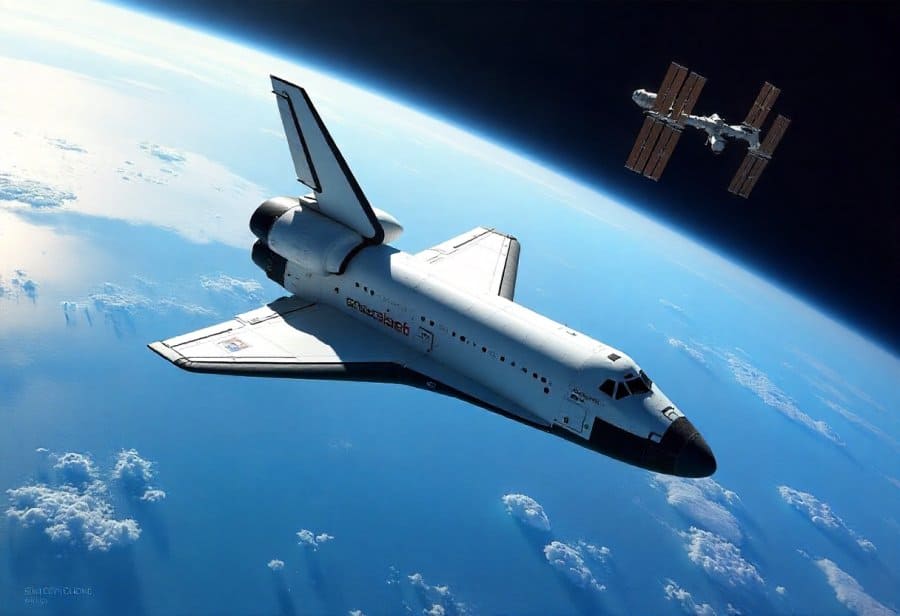
Legacy in the Stars: How the Shuttle Program Continues to Influence Modern Space Exploration
Today, the legacy of NASA’s shuttle program continues to shape space exploration in profound ways. The infrastructure built for the shuttle era—such as launch pads, mission control centers, and maintenance facilities—remains vital to current missions. Many of these sites have been repurposed to support new endeavors, including private sector efforts, ensuring that the foundational work of the shuttle program endures.
Public perception of the shuttle era often highlights its role as a symbol of ingenuity and resilience. The reusable design of orbiters like Atlantis demonstrated that spacecraft could be used multiple times, significantly lowering costs and enabling more frequent missions. This mindset has inspired a new wave of reusable rockets and spacecraft, such as SpaceX’s Crew Dragon and Boeing’s Starliner, which continue to build on the shuttle’s legacy of efficiency and sustainability.
Technological advancements pioneered during the shuttle program still influence today’s space activities. On-orbit maintenance capabilities, first demonstrated by Atlantis, are now central to servicing satellites and the International Space Station. These skills allow astronauts and robotic systems to perform repairs and upgrades, extending the operational lifespans of space assets and reducing the need for costly replacements. Such innovations have become standards for current spacecraft design and mission planning.
The shuttle’s impact extends beyond technology into international collaboration. The International Space Station, which Atlantis helped build and maintain, exemplifies global teamwork in space. Its success fostered partnerships among nations, making space exploration a collective pursuit. This spirit of cooperation, rooted in the shuttle era, continues to drive multinational missions and scientific endeavors, emphasizing shared goals and mutual benefit.
Infrastructural and technological legacies from the shuttle era also influence current efforts to develop sustainable space exploration strategies. The emphasis on reusability, safety, and international cooperation shapes the design of new spacecraft and missions. The lessons learned from Atlantis and its fleet inform ongoing innovations, ensuring that each step forward is grounded in proven expertise.
Additionally, the shuttle program’s history of pushing technological boundaries fosters a mindset of resilience and adaptability. The innovations in thermal protection, cargo handling, and on-orbit servicing provide a blueprint for tackling future challenges, whether exploring the Moon, Mars, or beyond. These capabilities are crucial as humanity aims for more distant and ambitious destinations.
Overall, the space shuttle’s legacy remains a cornerstone of modern space exploration. Its infrastructure, technological innovations, and collaborative spirit continue to influence how we approach new missions. The achievements of Atlantis and its sister orbiters inspire ongoing efforts to explore more sustainably, collaboratively, and boldly—building on a foundation forged over nearly three decades of pioneering human presence beyond Earth.
The end of the shuttle program marked a pivotal moment in space exploration, prompting reflection on its lasting influence. Understanding the legacy of Atlantis within NASA’s shuttle program history offers valuable insights into how past innovations continue to inform current and future missions, inspiring ongoing advancements in space technology.
From Past to Future: How Atlantis’s Last Flight Impacts Next-Generation Space Endeavors
The final flight of Atlantis left a lasting mark on the trajectory of human spaceflight, demonstrating that spacecraft could be both versatile and reliable after decades of service. Its success has shaped a renewed focus on designing reusable vehicles that lower costs and increase mission frequency, setting a standard for the next generation of exploration. These lessons continue to influence current efforts to develop spacecraft capable of supporting lunar bases, Mars missions, and beyond, where resilience and adaptability are vital.
Atlantis’s role in constructing and maintaining the International Space Station exemplifies the importance of international cooperation in space. Its ability to deliver supplies, modules, and crew helped establish the station as a global scientific hub and diplomatic platform. This spirit of partnership, rooted in the shuttle era, now informs multinational efforts to explore the Moon, Mars, and deep space, emphasizing shared resources and collective goals.
Technological innovations pioneered during Atlantis’s missions—such as improved thermal protection and cargo handling—have become benchmarks for modern spacecraft design. These advancements enable safer, more efficient missions, whether repairing satellites or exploring distant planets. The on-orbit maintenance capabilities demonstrated by Atlantis are now integral to extending the operational lives of space assets, reducing the need for costly replacements and fostering sustainable space exploration.
The shuttle’s legacy also resonates through its influence on commercial space ventures. Companies like SpaceX and Blue Origin build on the shuttle’s example of reusability and cost efficiency, accelerating the development of reusable rockets and spacecraft. This private-sector momentum complements government programs, making space more accessible and paving the way for routine missions—whether for scientific research, resource extraction, or tourism.
Furthermore, Atlantis’s final flight has reinforced the importance of resilience and innovation in tackling space’s challenges. Its success showed that with proper planning and technological refinement, human crews can operate safely over extended periods and in complex environments. This mindset encourages future missions to approach obstacles not as barriers, but as opportunities for breakthrough solutions.
The lessons learned from Atlantis continue to shape exploration strategies, emphasizing sustainability, international collaboration, and technological ingenuity. As we push toward establishing a permanent human presence on the Moon and venturing to Mars, these principles serve as guiding lights, ensuring our efforts are grounded in proven expertise and shared purpose.
In the end, Atlantis’s last journey was more than a farewell; it was a blueprint for future exploration. Its legacy inspires a new era where human resilience, innovation, and collaboration open doors to horizons once thought unreachable. The shuttle’s final flight reminds us that reaching beyond our planet is a collective endeavor—one built on the courage and curiosity that Atlantis so boldly embodied.

Charting New Horizons: The Future of Space Exploration Fueled by Innovation and Collaboration
Looking ahead, space exploration is entering an exciting new phase, driven by rapid technological advances, stronger international partnerships, and the rise of private companies. Reusable rockets, advanced propulsion systems, and miniaturized instruments are making missions more cost-effective and accessible, opening the door to exploring farther into the solar system. Lunar bases and Mars missions are now more than distant dreams—they’re becoming tangible goals, with missions designed to build on the legacy of Atlantis and the shuttle program.
The Artemis program exemplifies this shift, aiming to establish a sustainable human presence on the Moon as a stepping stone for future exploration. It emphasizes collaboration between government agencies and commercial partners, sharing costs and accelerating development. This approach not only makes deep-space missions more feasible but also safer for crews, fostering a new era of exploration fueled by shared expertise and resources.
Meanwhile, private companies like SpaceX and Blue Origin are transforming space travel with reusable rockets and lunar habitats. Their focus on reducing launch costs and increasing mission frequency complements traditional space agencies, creating a more dynamic and inclusive space industry. This commercial momentum is helping to democratize space, making scientific research, resource utilization, and even space tourism more achievable than ever before.
International cooperation remains central to future missions. Countries around the world are pooling resources and expertise to pursue lunar and Martian exploration, building on the collaborative spirit established during Atlantis’s missions to the International Space Station. These partnerships are vital for tackling the complex challenges of deep space, promoting peaceful exploration and shared scientific breakthroughs.
Emerging technologies like artificial intelligence, advanced propulsion, and miniaturized sensors are poised to revolutionize exploration. They will enable longer, safer missions and allow for more detailed scientific investigations. These tools will help us operate in harsher environments and overcome logistical hurdles, broadening our reach and deepening our understanding of the cosmos.
As exploration becomes more sustainable and inclusive, the focus shifts from individual missions to establishing a continual human presence beyond Earth. The lessons learned from Atlantis’s last flight continue to inspire new strategies centered on resilience, innovation, and collaboration. This mindset will guide us as we aim to turn ambitious visions of lunar bases, Mars colonies, and beyond into reality, opening a new chapter in humanity’s ongoing quest to explore the universe.